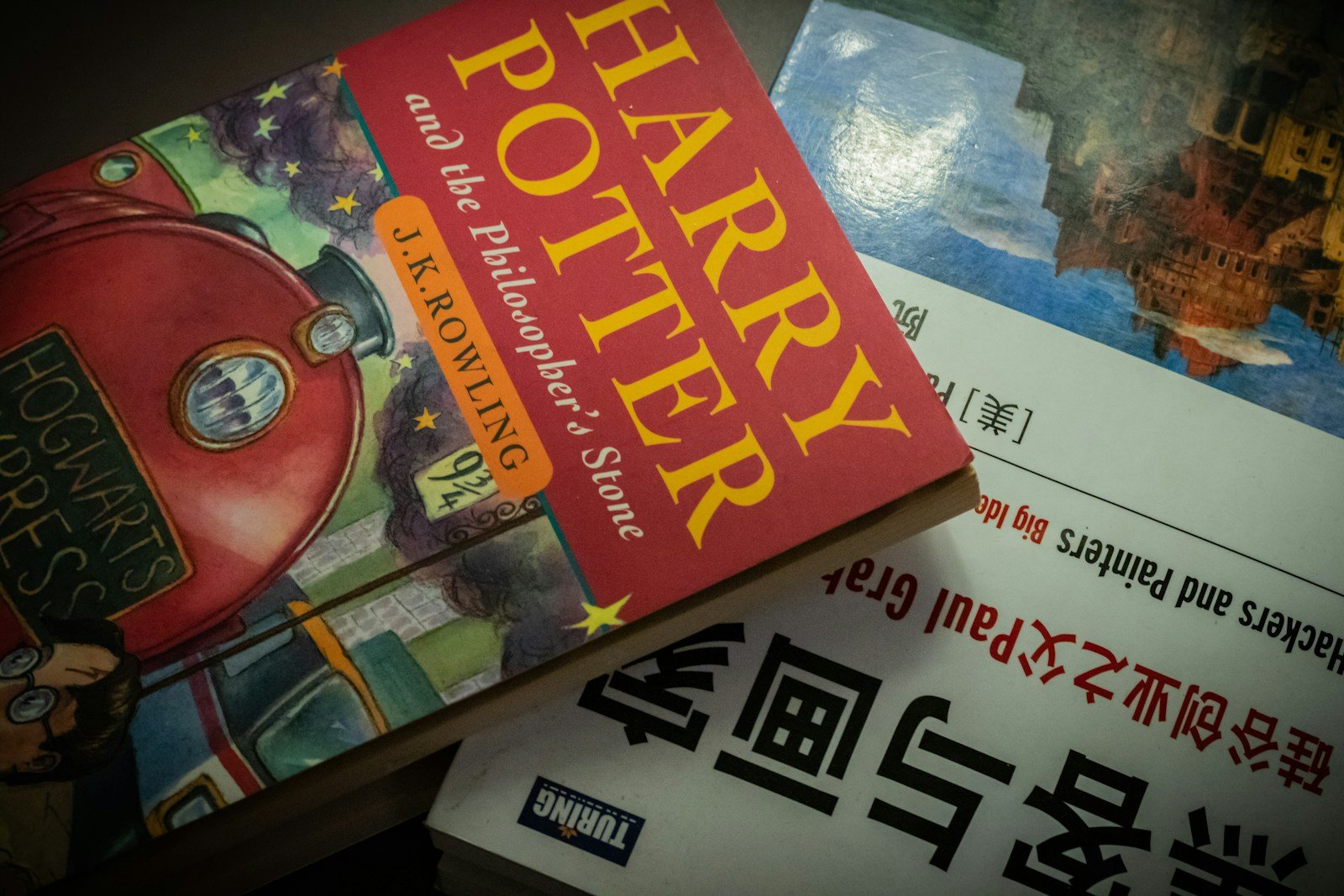
Movie Summary: Harry Potter and the Philosopher’s Stone
A magical beginning that started it all
Overview
Harry Potter and the Philosopher’s Stone (released in the US as Harry Potter and the Sorcerer’s Stone) hit theaters in 2001, directed by Chris Columbus and adapted from J.K. Rowling’s beloved novel. It’s the film that introduced millions of viewers to the Wizarding World, and more than two decades later, it remains the gateway many fans still use to fall in love with the franchise. This is a spoiler-filled summary, so consider yourself warned if you haven’t seen it yet.
Life Before Hogwarts
The film opens not with Harry, but with the aftermath of tragedy. Albus Dumbledore, the headmaster of Hogwarts, and Professor Minerva McGonagall deliver a baby to a doorstep in suburban England, accompanied by the gentle giant Rubeus Hagrid. That baby is Harry Potter, and the note left with him explains that his parents have been murdered by the dark wizard Lord Voldemort. Somehow, baby Harry survived the same attack that killed his parents, left only with a lightning-bolt-shaped scar on his forehead. This single act of survival makes him a legend in a world he doesn’t yet know exists.
Ten years pass, and Harry is raised by his aunt and uncle, Petunia and Vernon Dursley, who treat him with open resentment. He sleeps in a cupboard under the stairs, wears his cousin Dudley’s hand-me-downs, and is kept entirely in the dark about his true heritage. The Dursleys are aggressively “normal,” and anything resembling magic terrifies them. Strange things happen around Harry throughout his childhood, like glass mysteriously vanishing at a zoo enclosure, but he has no idea why.
Everything changes in the days leading up to Harry’s eleventh birthday. Letters begin arriving addressed directly to him, letters the Dursleys frantically intercept and burn. As the letters multiply, Uncle Vernon flees with the family to an isolated shack on a rock in the middle of the sea, hoping to escape whatever is sending them. It doesn’t work. At the stroke of midnight, Hagrid bursts through the door, delivers Harry his very first birthday cake, and reveals a stunning truth: Harry is a wizard, and he has been accepted into Hogwarts School of Witchcraft and Wizardry.
Discovering the Wizarding World
Hagrid whisks Harry away to Diagon Alley, a hidden shopping street tucked behind a pub called the Leaky Cauldron. This sequence functions as the audience’s introduction to magic itself, and it’s full of small wonders: a bank run by goblins, cauldrons and spellbooks for sale, and Ollivander’s wand shop, where “the wand chooses the wizard.” Harry’s wand, we learn, shares a magical core with the very wand that gave him his scar, a detail that hints at the deep connection between Harry and Voldemort long before the story explains it.
At King’s Cross Station, Harry learns how to access Platform 9¾, the hidden platform from which the Hogwarts Express departs. On the train, he meets Ron Weasley, the youngest son in a large, warm, but not particularly wealthy wizarding family, and Hermione Granger, a whip-smart Muggle-born witch who has already memorized half her textbooks. He also has a tense first encounter with Draco Malfoy, a boy from an old wizarding family who looks down on Harry’s ignorance of magical customs.
Arrival at Hogwarts
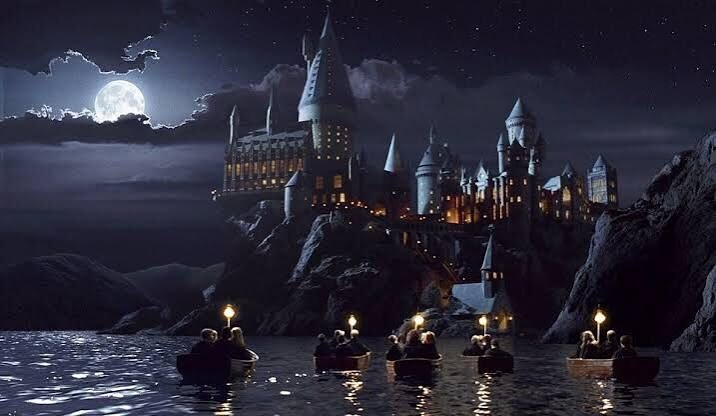
Once at Hogwarts, new students are sorted into one of four houses by the Sorting Hat: Gryffindor, Hufflepuff, Ravenclaw, or Slytherin. The Sorting Hat considers placing Harry in Slytherin, the house known for producing dark wizards, including Voldemort himself, but relents at Harry’s request and places him in Gryffindor instead, alongside Ron and Hermione. This is one of the film’s quieter but more important beats: Harry’s choice, not his raw ability, is what defines him.
Life at Hogwarts introduces Harry to an entirely new set of subjects and personalities. Professor McGonagall teaches Transfiguration with brisk precision. Professor Flitwick oversees Charms. Professor Sprout runs Herbology. Severus Snape, the Potions master, takes an immediate and unexplained dislike to Harry, needling him in class and radiating suspicion. Meanwhile, the eccentric Professor Quirrell teaches Defense Against the Dark Arts while wearing a conspicuous turban, stammering through his lessons in a way that seems more nervous than authoritative.
Harry also discovers he has a natural gift for flying. After an incident where Draco taunts Neville Longbottom and steals his enchanted keepsake, Harry gives chase on a broomstick and displays effortless flying instincts, catching a falling object mid-dive in front of the entire class. This catches the attention of Professor McGonagall, who promptly recruits him as the Gryffindor Quidditch team’s Seeker, the youngest player in a century. Quidditch itself is dramatized as a fast, dangerous sport played on broomsticks above a stadium of cheering wizards, and it becomes a recurring backdrop for the film’s tension and triumph.
The Mystery Beneath the School
Beneath the wonder of Hogwarts life, a mystery is quietly unfolding. During a birthday outing to the school with Hagrid, Harry glimpses something being transferred out of a high-security vault at Gringotts Bank, a vault that is emptied that same day. Later, wandering the school after hours, Harry, Ron, and Hermione stumble upon a fearsome three-headed dog guarding a trapdoor on the school’s forbidden third floor. Piecing together overheard conversations and their own research, the trio concludes that the dog is guarding something valuable, and that Snape may be trying to steal it.
Their investigation eventually leads them to the truth: hidden beneath the trapdoor is the Philosopher’s Stone, a legendary magical object created by the alchemist Nicolas Flamel. The Stone can turn any metal into gold and produces the Elixir of Life, granting immortality to whoever drinks it. Dumbledore has arranged for the Stone to be moved to Hogwarts and hidden behind a gauntlet of magical protections, believing it’s the safest place for it. The children fear that someone inside the castle intends to steal the Stone for Voldemort, who, though gravely weakened after his failed attack on baby Harry, is not truly dead and is desperate to regain a body and his full power.
Small, unsettling incidents accumulate throughout the year: Harry’s broom is seemingly jinxed during a Quidditch match, catching fire beneath him until Hermione notices Snape muttering under his breath and sets his robes alight, breaking the apparent curse. Harry also has a strange encounter with the Mirror of Erised, a magical mirror that shows the viewer their deepest desire; for Harry, it shows his parents alive, a moment that reveals both his loneliness and the emotional core underlying the plot’s mysteries. Hagrid, meanwhile, is revealed to have won a dragon egg in a card game, and the trio must scramble to help him deal with the illegal, rapidly growing creature before it’s discovered, an escapade that costs Gryffindor house points and lands the trio in detention in the Forbidden Forest.
It’s during that detention that events accelerate. In the forest, Harry encounters a cloaked figure drinking the blood of a unicorn to sustain itself, a chilling image that the centaur Firenze explains is the mark of someone so desperate to cling to life that they’d commit a monstrous act to do it. This confirms the trio’s fears that Voldemort, in some diminished form, is closer to the castle than anyone realizes.
The Final Confrontation
When Hagrid accidentally lets slip the secret to controlling the three-headed dog (music puts it to sleep), Harry, Ron, and Hermione realize that whoever is after the Stone now has everything they need. Believing Dumbledore has been lured away from the school and that the theft is imminent, the three friends decide to go after the Stone themselves rather than wait for an adult to intervene.
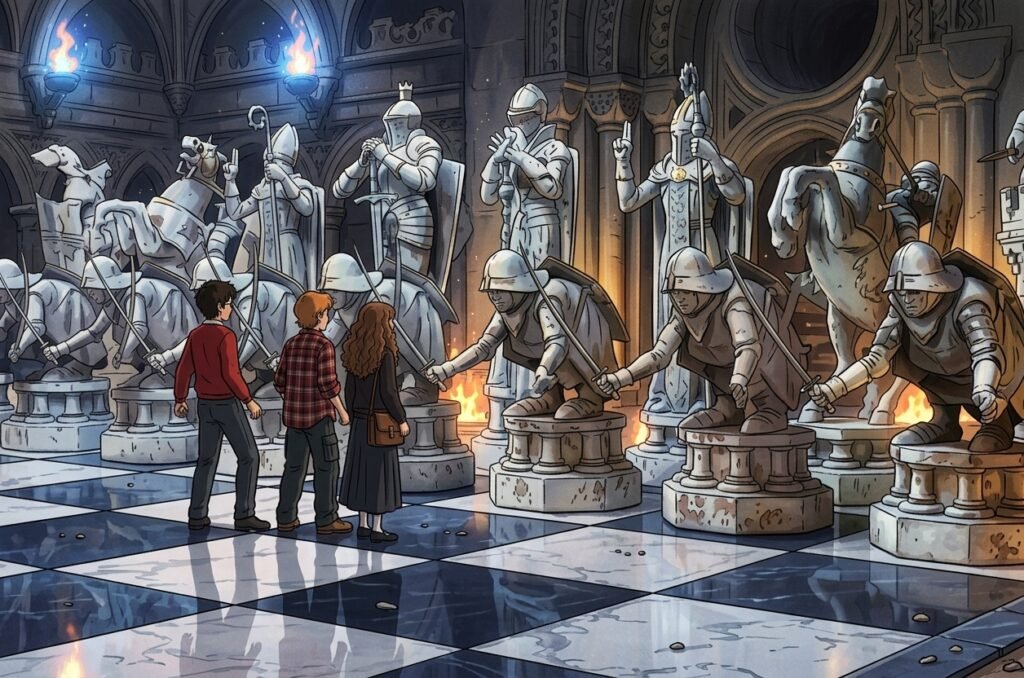
What follows is a gauntlet of trials, each testing a different skill. They get past the three-headed dog using music, then fall through a plant called Devil’s Snare that constricts anyone who struggles, escaping only because Hermione recalls that it hates sunlight and casts a spell to produce it. In a large chamber, they must catch a single flying key among hundreds using broomsticks in order to unlock a door, a challenge that plays to Harry’s flying talent. Next is a giant, animated chess set, where the trio must physically play as pieces to cross the room; Ron makes the pivotal, self-sacrificing move that wins the game but leaves him unconscious, forcing Harry and Hermione to continue without him.
After solving a logic puzzle involving a row of potions (a moment showcasing Hermione’s strengths, allowing her to figure out which potion is safe to drink and which allows Harry to pass alone), Harry proceeds by himself into the final chamber. There, he expects to find Snape, but instead discovers Professor Quirrell, revealed as the true traitor. Quirrell removes his turban to reveal Voldemort’s disfigured, spectral face embedded on the back of his head. Quirrell has been serving as a host for Voldemort’s weakened spirit all along, and Snape’s suspicious behavior throughout the film was actually the result of him trying to protect Harry, not harm him.
Voldemort, speaking through Quirrell, tries to convince Harry to hand over the Stone, which Harry has just retrieved from the Mirror of Erised (Dumbledore had enchanted the mirror so that only someone who wanted to find the Stone, but not use it, could retrieve it). When Harry refuses, a struggle ensues. Quirrell attempts to kill Harry, but discovers that physical contact with Harry causes him searing pain, a side effect of the protective magic Harry’s mother left in his blood when she sacrificed herself to save him as an infant. Harry clings to Quirrell’s face, and the resulting pain is enough to defeat Quirrell and drive Voldemort’s spirit fleeing from the castle, though clearly not destroyed for good.
Harry loses consciousness and wakes up days later in the school hospital wing, with Dumbledore at his bedside to fill in the remaining gaps: the protection of his mother’s love, the truth about the Stone (which Dumbledore has since had destroyed to keep it out of danger), and reassurance that this will not be Harry’s last encounter with Voldemort.
The Ending
The film closes on the Hogwarts end-of-year feast, where Dumbledore awards last-minute house points for the bravery Harry, Ron, and Hermione displayed, points that flip Gryffindor from last place to the winner of the House Cup in a satisfying, crowd-pleasing turn. Harry boards the train back to the Dursleys for the summer, but for the first time, he leaves not as an unwanted orphan, but as someone who belongs somewhere, with friends who will return to that world alongside him.
Why It Resonates
What makes the film work so well, even decades later, is its sense of pure discovery. The audience learns about Hogwarts, Diagon Alley, and the rules of magic at the same pace as Harry, which makes the introduction feel personal and immersive instead of like a lecture. The film also plants themes that carry through the rest of the series: that choices matter more than raw ability, that love and sacrifice carry a protective power stronger than any spell, and that courage often looks like three eleven-year-olds walking toward danger because the adults aren’t there to do it for them.
The Cast and the Look of the Film
Part of what makes this film so enduring is the casting, which feels almost eerily perfect in hindsight. Daniel Radcliffe, Rupert Grint, and Emma Watson were largely unknown child actors when they were cast as Harry, Ron, and Hermione, and their genuine, unpolished chemistry lends the film an authenticity that a more seasoned trio might not have achieved. Around them, the film assembles a murderers’ row of veteran British talent: Richard Harris brings a gentle, grandfatherly warmth to Dumbledore, Maggie Smith gives McGonagall a stern but caring edge, Alan Rickman turns Snape’s every line into something dripping with menace and ambiguity, and Robbie Coltrane’s Hagrid radiates warmth and vulnerability despite his towering size.
Visually, Chris Columbus and his team leaned into a storybook aesthetic, favoring practical sets, detailed production design, and a sense of tactile wonder over flashy effects. Hogwarts itself, brought to life through a mix of real filming locations and elaborate sets, feels like a genuine place with centuries of history rather than a green-screen backdrop. John Williams’ score, especially the now-iconic “Hedwig’s Theme,” does a remarkable amount of storytelling on its own, cueing the audience into the magic and mystery of this world before a single line of dialogue is spoken.
The Bottom Line
As an origin story, Philosopher’s Stone wisely keeps its focus small and personal rather than chasing spectacle. It’s less about grand battles than about warmth, humor, and the slow unfolding of a world that would spend the next decade capturing audiences’ imaginations. For newcomers and longtime fans alike, it remains a cozy, nostalgic watch, the cinematic equivalent of curling up with a favorite book on a rainy afternoon.

Hi, this is a comment.
To get started with moderating, editing, and deleting comments, please visit the Comments screen in the dashboard.
Commenter avatars come from Gravatar.