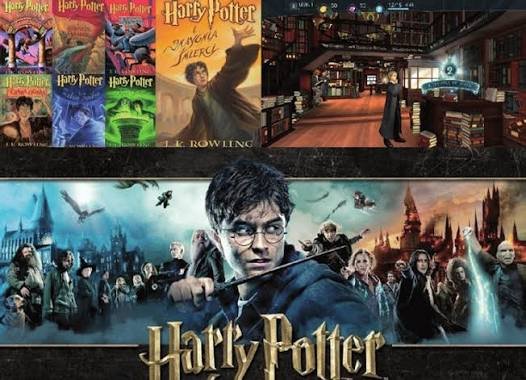
Harry Potter: Books vs. Movies — What Changed and Why It Matters
When J.K. Rowling’s seven Harry Potter novels made the leap to the big screen between 2001 and 2011, the films became one of the most successful movie franchises in history. Millions of fans who grew up reading about Hogwarts also grew up watching it, and for a lot of people the line between “what happened in the book” and “what happened in the movie” has blurred over time. But if you go back and read the novels closely after having only seen the films — or vice versa — you’ll notice the two versions of this story diverge in some pretty significant ways. Some of these differences are small, cosmetic changes made for time or budget. Others quietly reshape characters, subplots, and even the emotional weight of major events. This article walks through the biggest differences between the books and the movies, why those changes were likely made, and what effect they have on the story as a whole.
The Simple Reality: Books Have More Room to Breathe
Before getting into specifics, it’s worth stating the obvious: a novel and a two-hour film are fundamentally different mediums with different constraints. The Harry Potter books range from a little over 300 pages (the first one) to over 800 pages (the fifth one, Order of the Phoenix). A film adaptation simply cannot include everything from an 800-page book and still be watchable in one sitting. Something always has to go. The filmmakers—principally directors Chris Columbus, Alfonso Cuarón, Mike Newell, and David Yates, along with screenwriter Steve Kloves, who adapted all but one of the films—had to make constant judgment calls about what mattered most to the plot versus what could be trimmed without the story falling apart.
That’s the baseline reality behind almost every difference on this list. But it’s not the whole story, because some choices weren’t about trimming for time — they were creative decisions that actually changed the tone, characterization, or thematic weight of the material.
Peter Pettigrew and the Marauders’ Backstory
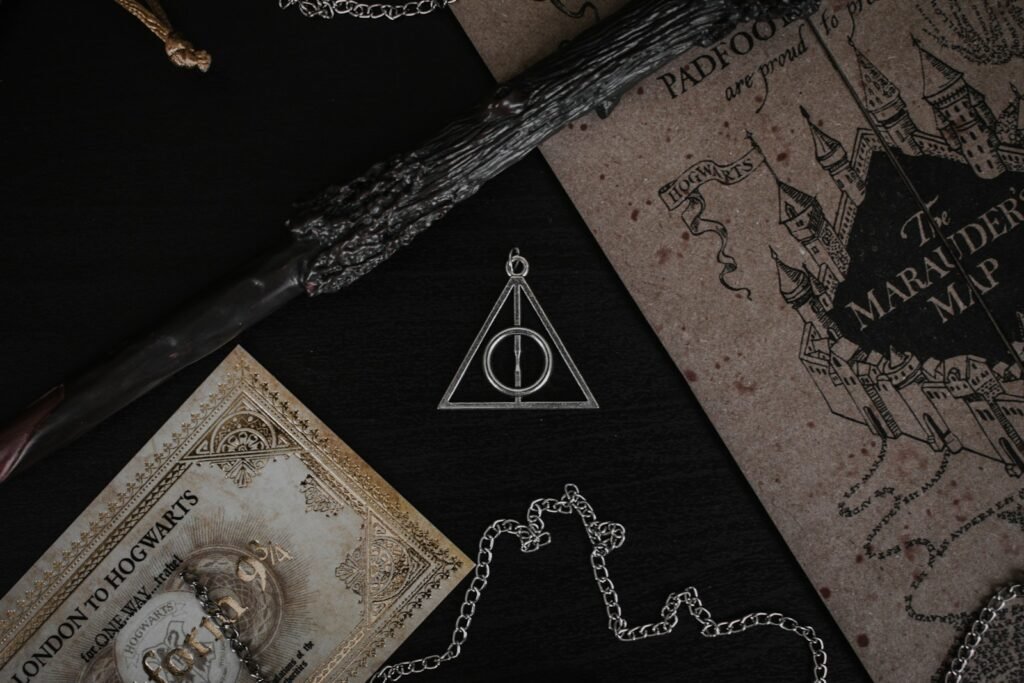
One of the more consequential trims happens in Prisoner of Azkaban. In the book, a huge amount of context is given about the history between James Potter, Sirius Black, Remus Lupin, and Peter Pettigrew — the four boys nicknamed the Marauders, who became Animagi in school specifically to keep Lupin company during his werewolf transformations. Their whole friendship, the reasons behind Sirius’s fury and heartbreak over Pettigrew’s betrayal, and the deep, layered history of loyalty and treachery are given real space on the page.
The film compresses all of this into a much shorter sequence near the Shrieking Shack. It still conveys the core twist — that Pettigrew, not Sirius, betrayed the Potters, and that Sirius has been wrongly imprisoned for over a decade — but it loses a lot of the emotional texture. Book readers understand exactly why Lupin is so devastated by Sirius’s apparent betrayal, because they’ve had hundreds of pages to understand how close these four boys once were. Movie viewers get the plot mechanics but less of the heartbreak underneath it.
The Removal of S.P.E.W. and Hermione’s Activism
In the books, starting in Goblet of Fire, Hermione launches the Society for the Promotion of Elfish Welfare, or S.P.E.W., after discovering that house elves are enslaved and mistreated across the wizarding world, including at Hogwarts itself. This becomes a recurring thread across several books. It’s a genuinely important part of Hermione’s character — it shows her instinct to fight for the underdog even when nobody around her takes her seriously, and it ties into larger themes about prejudice, inherited injustice, and who in society gets to have rights.
The films drop this subplot almost entirely. Dobby and Kreacher still appear and still matter to the plot, but the larger commentary on house elf slavery as a systemic issue — and Hermione’s crusade against it — essentially disappears. This is one of the more debated cuts among fans, because it removes a layer of social commentary that many readers feel is central to what the books are actually about beneath the surface-level magic and adventure.
Percy Weasley’s Estrangement from the Family
In the books, Percy Weasley’s arc is genuinely painful. After Goblet of Fire, Percy takes a job at the Ministry of Magic and, driven by ambition and a desire to distance himself from what the Ministry considers his family’s troublemaking reputation, he essentially disowns his family. He refuses to believe Voldemort has returned, sides with the Ministry’s propaganda, and writes a scathing letter to Ron dismissing their father. This rift lasts for a long time and creates real tension within the Weasley family, especially for Mrs. Weasley, who is shown to be quietly devastated by her son’s rejection. Percy’s eventual reconciliation with his family — which happens only after tragedy strikes during the Battle of Hogwarts — is one of the more quietly emotional threads in the final book.
In the films, this estrangement is barely addressed. Percy simply fades into the background after the fourth movie and reappears without much explanation for a brief, understated moment during the final battle. Casual movie-only viewers might not even remember there was supposed to be a rift at all.
The Deaths That Land Differently
Character deaths hit differently depending on how much buildup a given medium can provide, and this is one of the clearest divides between the books and films.
Take Fred Weasley’s death during the Battle of Hogwarts. In the book, it’s a gut-punch specifically because of how it’s described — sudden, almost throwaway in its brutality, emphasizing the senselessness of war. Readers have spent seven books watching Fred and George as an inseparable comedic duo, so losing half of that pair lands with enormous weight, made worse by how the text almost refuses to dwell on it, mirroring the chaos of battle. The film includes his death, but because the movies had already trimmed down a lot of Fred and George’s material across the series to make room for other plot points, some viewers who hadn’t read the books have said the emotional impact isn’t as strong as it could have been, simply because less time had been spent building up that specific relationship on screen.
Similarly, the death of Mad-Eye Moody occurs off-page in the seventh book — Harry and the others simply learn afterward that he didn’t survive the escape from Privet Drive. The film actually shows it happening in real time, which is a case where the movie arguably increases the immediate emotional impact of a death compared to the book’s more understated approach.
The Ministry of Magic and Wizarding World-Building
The books spend a lot of time developing the wizarding world’s institutions — the Ministry of Magic’s bureaucracy, its departments, its political corruption, and the way propaganda and fear are used to control public opinion, especially in Order of the Phoenix and Deathly Hallows. Dolores Umbridge’s rise to power at Hogwarts, for instance, is depicted in the book as part of a broader Ministry takeover strategy, with numerous smaller scenes showing how she incrementally seizes control of the school through a series of “Educational Decrees.”
The films still portray Umbridge as a menacing figure — Imelda Staunton’s performance is widely praised — but a lot of the granular detail about how the Ministry operates, how it manipulates the press (via the Daily Prophet), and how deeply entrenched wizarding society’s flaws are gets simplified. The books paint a much more expansive picture of the wizarding world as a fully functioning, flawed society with its own politics, prejudices, and institutional failures. The films tend to keep the focus tighter on Harry’s personal journey.
Character Personalities Shift
Several characters read quite differently on the page than they appear on screen, partly due to casting and performance choices and partly due to how dialogue was adapted.
Ginny Weasley is a good example. In the books, especially by Order of the Phoenix and beyond, Ginny is confident, sharp-tongued, funny, and has dated several boys before getting together with Harry — she’s established as her own fully realized character with her own social life and sense of humor independent of her feelings for Harry. In the films, largely due to time constraints, her characterization is thinner, and her relationship with Harry develops with much less buildup, making it feel more sudden to movie-only audiences.
Dumbledore is another notable shift. In the books, especially earlier on, Dumbledore is portrayed as a warm, whimsical, occasionally silly figure who nonetheless carries an undercurrent of formidable power and mystery. Richard Harris’s portrayal in the first two films captured much of that gentle warmth. After his passing, Michael Gambon took over the role and brought a notably different energy — more intense, at times more openly emotional or even physically aggressive in certain scenes (his shaking of Harry in Goblet of Fire is a famous example that isn’t in the book and struck many longtime readers as out of character). Neither performance is “wrong,” but they represent genuinely different interpretations of who Dumbledore is.
Snape, meanwhile, tends to benefit from the adaptation in a certain sense — Alan Rickman’s performance is so widely beloved that many fans feel it actually enhances the character, even though the films can’t fully capture the years of internal narration and backstory that make Snape’s motivations so devastating once revealed in the books.
Neville Longbottom’s Larger Role in the Books
Neville is treated as a genuinely significant character throughout the book series, with recurring hints planted from very early on that gesture toward his importance — his parents’ history, his own bravery, and the way his arc parallels Harry’s in ways that are spelled out explicitly by Dumbledore in Order of the Phoenix (the idea that the prophecy could have referred to either Neville or Harry). The books also give Neville a fuller arc of growth, from clumsy and forgetful to a genuinely formidable young wizard by the final book, where he plays an enormous role in the Battle of Hogwarts.
The films retain the broad strokes of this arc and Matthew Lewis’s performance in the final films captures Neville’s transformation well, but a lot of the connective tissue — the small moments throughout the middle books that build toward his ultimate heroism — gets thinned out, making his final-film heroics feel a little more sudden to viewers who haven’t read the source material.
Quidditch, School Life, and the Texture of Hogwarts
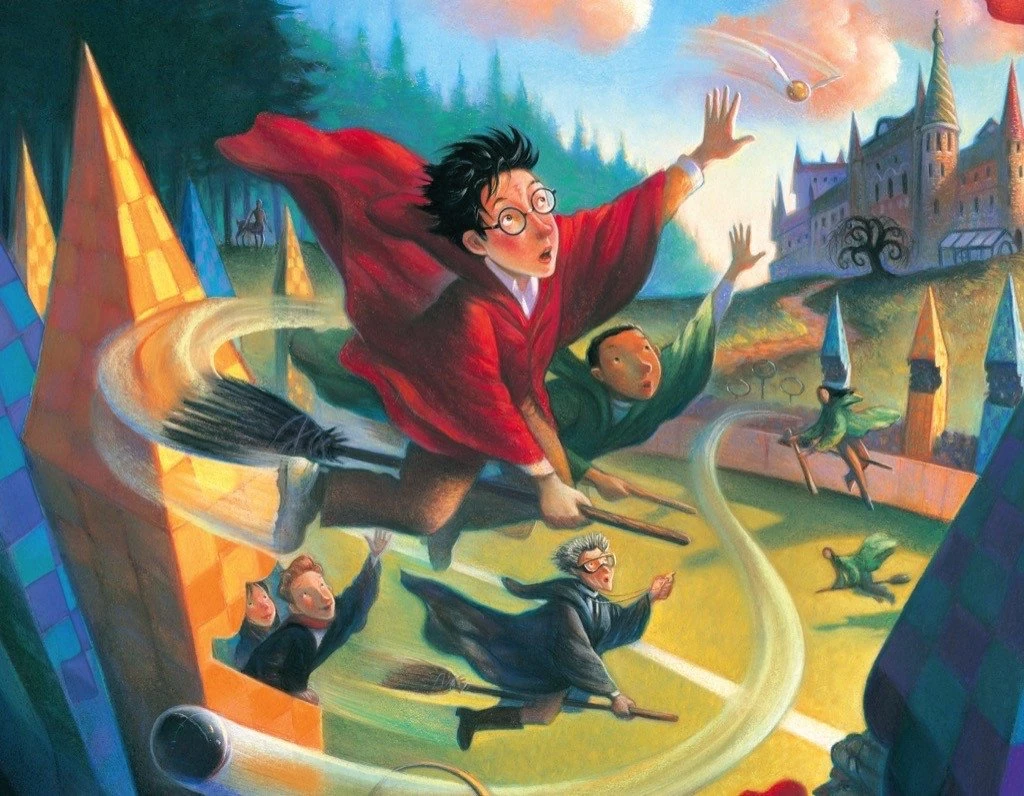
The books devote considerable space to the day-to-day texture of school life: classes, homework, House points, meals in the Great Hall, and an enormous amount of Quidditch. Entire chapters are built around Quidditch matches, practices, and the internal politics of team selection. The films, especially as the series progresses and the plots grow darker and more urgent, quietly reduce how much time is spent on this “school life” texture in favor of advancing the central plot. By the later films, Quidditch has all but disappeared, and a lot of the ordinary rhythms of Hogwarts life get compressed or cut.
This is one of the more understandable and defensible changes — a two-and-a-half-hour movie centered on the fight against Voldemort doesn’t have room for lengthy Quidditch commentary — but it does mean the films present a somewhat more plot-driven, streamlined version of Hogwarts than the more leisurely, immersive world of the books.
The Order of the Phoenix’s Headquarters and the Black Family History
In the books, Sirius Black’s ancestral home at Grimmauld Place is described in far greater detail, including the deeply dysfunctional history of the Black family — their obsession with blood purity, the tapestry depicting the family tree with members burned off for marrying outside pure-blood lines, and Kreacher’s tortured loyalty to a family whose values he can’t fully let go of even as they mistreat him. This history matters a great deal to the emotional undercurrent of Order of the Phoenix and Deathly Hallows, particularly Kreacher’s eventual redemption arc, which is deeply satisfying in the books but almost entirely absent from the films (Kreacher’s turn toward loyalty to Harry happens quickly and with far less explanation on screen).
Compressed Timelines and Combined Characters
To keep run times manageable, the films frequently compress timelines or merge multiple book characters and subplots into single scenes or characters. Ludo Bagman, a Ministry official with his own subplot involving gambling debts to goblins in Goblet of Fire, is absent from the film almost entirely. Winky the house elf’s storyline, closely tied to the S.P.E.W. subplot, is also largely removed. Peeves the poltergeist, a recurring nuisance throughout the books who provides comic relief and occasional plot-relevant chaos, doesn’t appear in the films at all, despite being a fairly prominent presence on the page.
Similarly, some information delivered through Harry’s internal thoughts or private conversations in the books gets redistributed to other characters on screen, simply because film as a medium can’t easily convey internal monologue the way prose can.
Tone: Whimsical Early Books vs. Increasingly Dark Films
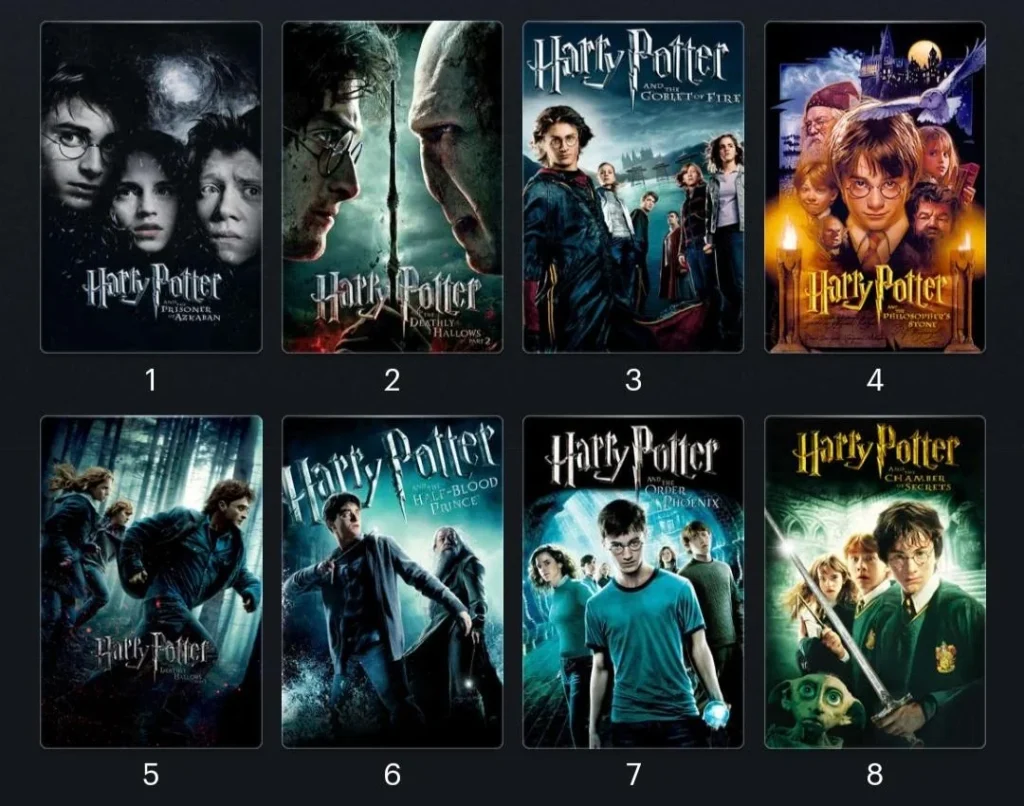
The first two books, Philosopher’s/Sorcerer’s Stone and Chamber of Secrets, have a distinctly lighter, more whimsical tone suited to their younger intended readership, and the Chris Columbus-directed films capture that faithfully, sometimes almost scene-for-scene. Starting with Prisoner of Azkaban under Alfonso Cuarón’s direction, the films take a noticeably more atmospheric, visually darker turn, and this tonal shift accelerates through the rest of the series under Mike Newell and then David Yates. This mirrors the increasingly dark subject matter in the books themselves, but some fans feel the films leaned into the darker aesthetic a bit faster and more dramatically than the books’ prose did, particularly in Prisoner of Azkaban, where the school’s physical appearance and general atmosphere shift dramatically compared to the relatively sunnier tone of the corresponding book.
The Epilogue and “All Was Well”
Both the final book and final film include the “Nineteen Years Later” epilogue, showing the central characters as adults sending their own children off to Hogwarts. The scene exists in both versions and is fairly faithful, though it’s one of the more divisive elements among fans regardless of medium — some find it a satisfying, warm conclusion, while others feel it wraps things up a bit too neatly compared to the weight of what came before. This is one of the rare instances where the book and film versions are close enough that the debate isn’t really about adaptation differences at all, but about the choice itself.
Why These Differences Exist
Stepping back, most of these changes come down to a few recurring pressures:
Runtime constraints. Even the longest Harry Potter films run under three hours, while the books — especially from the fourth one onward — are hundreds of pages long. Something has to give, and subplots that don’t directly serve the central plot (like S.P.E.W., Ludo Bagman, or Percy’s estrangement) are the most likely casualties.
The limits of visual storytelling. Books can spend paragraphs inside a character’s head, exploring motivations, memories, and internal conflict. Film has to externalize all of that through dialogue, expression, and action, which naturally means some psychological depth gets lost or simplified in translation.
Different creative visions across directors. Because four different directors helmed the eight films, there’s a noticeable shift in visual style and tone across the series, which sometimes creates inconsistencies with how faithfully certain books were adapted. Cuarón’s more atmospheric, moody Prisoner of Azkaban looks and feels quite different from Columbus’s brighter, more literal early entries.
Marketing and pacing considerations. Some choices, like emphasizing certain visually spectacular sequences (dragons, Quidditch matches, magical duels) over quieter character-driven scenes, reflect the practical reality that studios want films that draw large audiences and translate well into trailers and marketing.
Which Version Is “Better”?
This is ultimately a matter of personal taste, and it’s probably the wrong question to ask in the first place. The books and films aren’t really in competition with each other — they’re two different artistic interpretations of the same underlying story, each with its own strengths. The books offer depth, interiority, and a fully immersive fictional world with room for subplots, social commentary, and slow-building emotional arcs that the films simply don’t have space for. The films offer visual spectacle, genuinely excellent performances from a murderers’ row of British acting talent, iconic production design, and the immense pleasure of literally seeing Hogwarts, Diagon Alley, and the wizarding world brought to life.
Many longtime fans describe their ideal experience as combining both: reading the books for the full emotional and narrative depth, then watching the films to see the world visualized and to enjoy performances that, in many cases, have become inseparable from how fans now picture these characters. Few could imagine Snape without Alan Rickman’s voice, or Hagrid without Robbie Coltrane’s warmth, even though those interpretations are the films’ additions to characters who technically existed on the page first.
Final Thoughts
The gap between the Harry Potter books and their film adaptations is a useful case study in what gets gained and lost whenever a beloved novel makes the jump to the screen. Some changes were unavoidable compressions necessary to fit sprawling stories into feature-length runtimes. Others reflect genuine creative choices that shifted characterization, tone, or thematic emphasis in ways that are still debated by fans two decades later. Neither version replaces the other. If you’ve only watched the movies, the books offer a richer, slower, more textured version of a world you already love, filled with subplots and social commentary you may not even know exist. And if you’ve only read the books, the films offer a chance to see that same world made vivid and tangible, brought to life by a cast and crew who clearly cared about honoring the spirit of the source material, even when they couldn’t include every single page.