From Comic Panels to Cinema: The Complete Spider-Man Movie Evolution
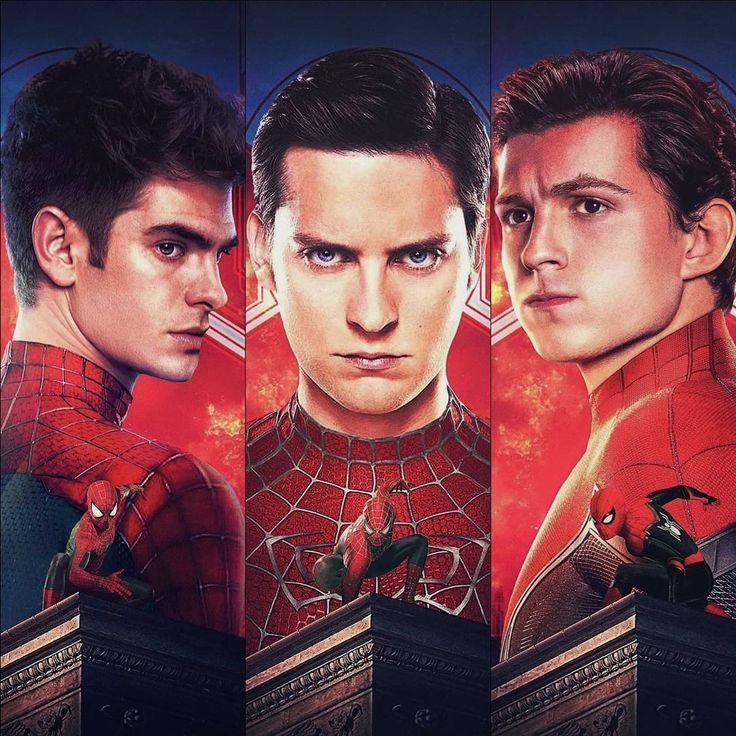
Few superheroes have been reinvented as many times, by as many different studios, for as many different generations, as Spider-Man. Since 2002, audiences have watched at least three distinct actors swing through New York City, two entirely different studios build competing universes, and an animated multiverse blow the whole concept wide open. What follows is a title-by-title walk through every major Spider-Man film, tracing how Peter Parker’s story has been told and retold without ever quite losing what makes him Spider-Man in the first place.
Spider-Man (2002)
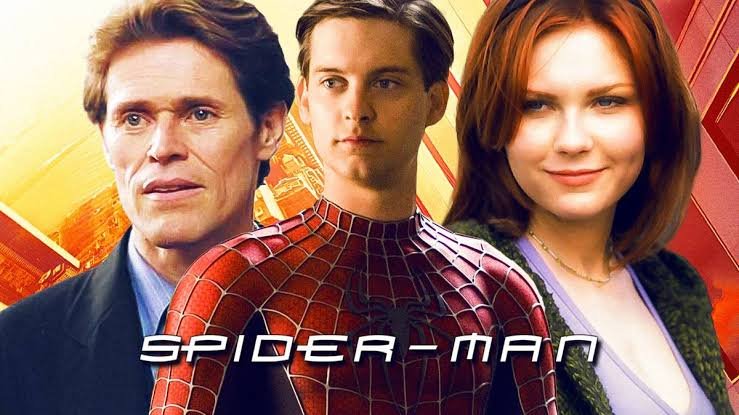
Sam Raimi’s original film is the one that started it all in the modern blockbuster sense. Tobey Maguire plays Peter Parker, a socially awkward high schooler bitten by a genetically modified spider on a school field trip. The film follows the now-familiar beats: Peter discovers his powers, builds his web-shooters and costume, and learns the hard way that “with great power comes great responsibility” after his failure to stop a robber indirectly leads to the death of his beloved Uncle Ben.
The villain here is Norman Osborn, played by Willem Dafoe, a scientist-industrialist who transforms into the Green Goblin after testing an unstable performance enhancer on himself. What made the film resonate wasn’t just the spectacle of a man swinging between skyscrapers, though that was groundbreaking for its time. It was the emotional throughline: Peter’s unrequited love for Mary Jane Watson, his strained friendship with Norman’s son Harry, and the guilt he carries for Uncle Ben’s death. The film ends with Peter choosing to protect Mary Jane by keeping her at arm’s length, setting up the tortured-hero dynamic that would define the trilogy.
Spider-Man 2 (2004)
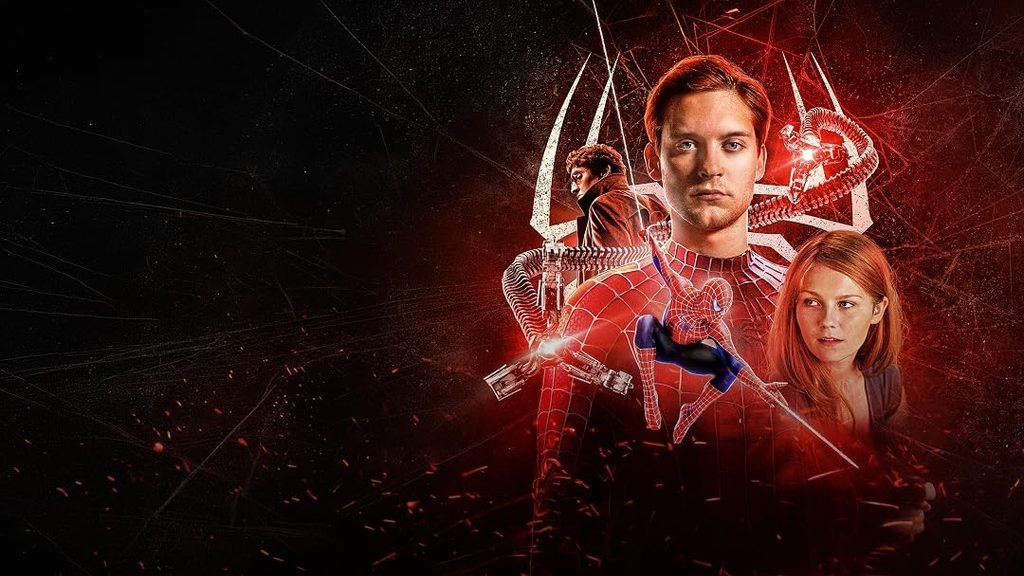
Widely regarded as one of the best superhero films ever made, the sequel finds Peter buckling under the weight of his double life. He’s failing classes, losing jobs, and slowly losing Mary Jane to another man, all while his powers begin to falter under the stress. The film’s central metaphor, that heroism demands sacrifice most people never see, gives the story real emotional weight.
The villain is Dr. Otto Octavius, a brilliant scientist whose fusion experiment goes catastrophically wrong, fusing four mechanical arms to his spine and driving him toward obsession and violence as Doctor Octopus. Alfred Molina’s performance turns Doc Ock into a genuinely tragic figure rather than a simple menace. The film’s standout set piece, a runaway elevated train that Spider-Man stops with his bare hands, remains one of the genre’s most celebrated sequences. By the end, Peter reclaims his sense of purpose and finally reveals his identity to Mary Jane, who chooses to stand by him despite the danger.
Spider-Man 3 (2007)
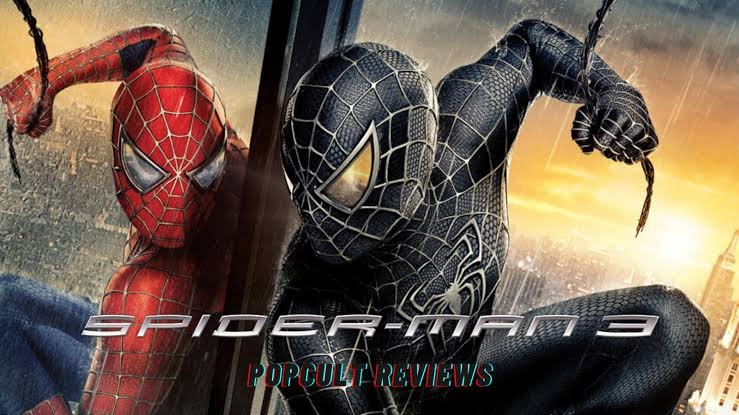
The third and, for a long time, final film in Raimi’s trilogy is famous for trying to do too much at once. It juggles three villains: Harry Osborn, who becomes the New Goblin after discovering Peter killed his father; Flint Marko, a escaped convict transformed into the sand-based Sandman; and Eddie Brock, a rival photographer who bonds with an alien symbiote to become Venom. Layered on top of that is a subplot in which the symbiote briefly corrupts Peter himself, turning him arrogant and vengeful.
Critics and fans were divided on the film’s tone and pacing, particularly a much-mocked sequence in which a symbiote-influenced Peter struts through the streets in emo-tinged self-satisfaction. Still, the film has its defenders, and it does bring closure to the Raimi era: Harry sacrifices himself to save Peter, and Peter and Mary Jane reconcile after a rocky stretch. Whatever its flaws, the trilogy closed out with the core relationships Raimi had spent three films building.
The Amazing Spider-Man (2012)
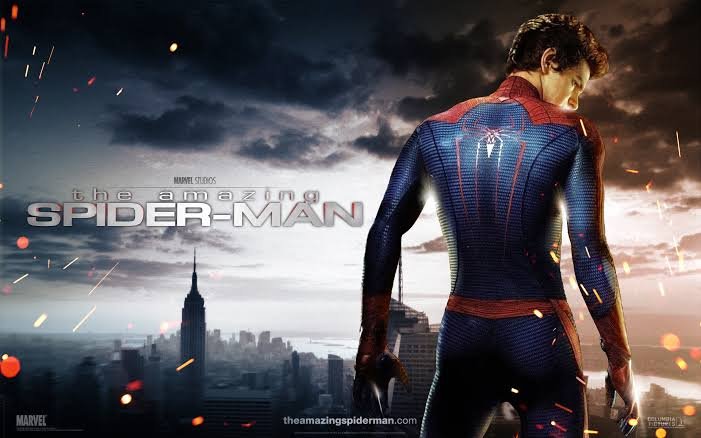
Only five years after Raimi’s trilogy ended, Sony rebooted the franchise with Marc Webb’s The Amazing Spider-Man, starring Andrew Garfield. This version leaned harder into Peter’s scientific curiosity and his family mystery, opening with young Peter being left with his Aunt May and Uncle Ben after his parents mysteriously disappear. As a teenager, Peter investigates his father’s old research at Oscorp, gets bitten by a genetically altered spider there, and develops his powers.
The film introduces Gwen Stacy, played by Emma Stone, as Peter’s love interest, replacing Mary Jane as the central romantic relationship for this iteration. The villain is Dr. Curt Connors, a colleague of Peter’s father who transforms into the reptilian Lizard after using himself as a test subject for a limb-regeneration serum. Garfield’s Peter is quippier and more emotionally raw than Maguire’s, and the film puts real emphasis on Uncle Ben’s death and the guilt that follows Peter afterward. It ends with Peter promising Gwen’s dying father that he’ll stay away from her, a promise he almost immediately struggles to keep.
The Amazing Spider-Man 2 (2014)
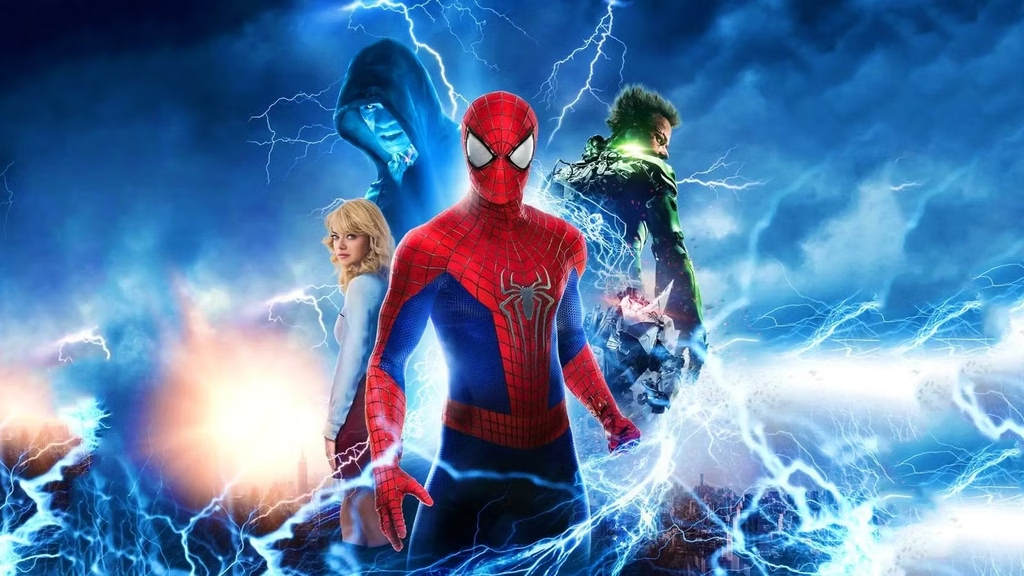
The sequel expands the world considerably, perhaps too much for its own good. Peter and Gwen’s relationship takes center stage, complicated by Peter’s broken promise to her father. Meanwhile, Harry Osborn returns to New York to reunite with childhood friend Peter and to seek treatment for a genetic disease from his dying father Norman, only to be denied and later transform into a green-skinned, super-strengthed version of the Green Goblin.
The film’s most consequential and controversial choice is its ending: after teaming up to stop Harry’s Goblin, Gwen Stacy falls from a clock tower, and despite Peter’s desperate attempt to catch her with a web, she dies. It’s a direct adaptation of a famous, tragic moment from the comics, and it devastated audiences even as some critics felt the film around it was overstuffed with villains, including a barely-used Electro played by Jamie Foxx and hints at a Sinister Six team-up that never came to be. Plans for further Amazing Spider-Man films and spin-offs were ultimately shelved as Sony pivoted toward a partnership with Marvel Studios.
Spider-Man: Homecoming (2017)
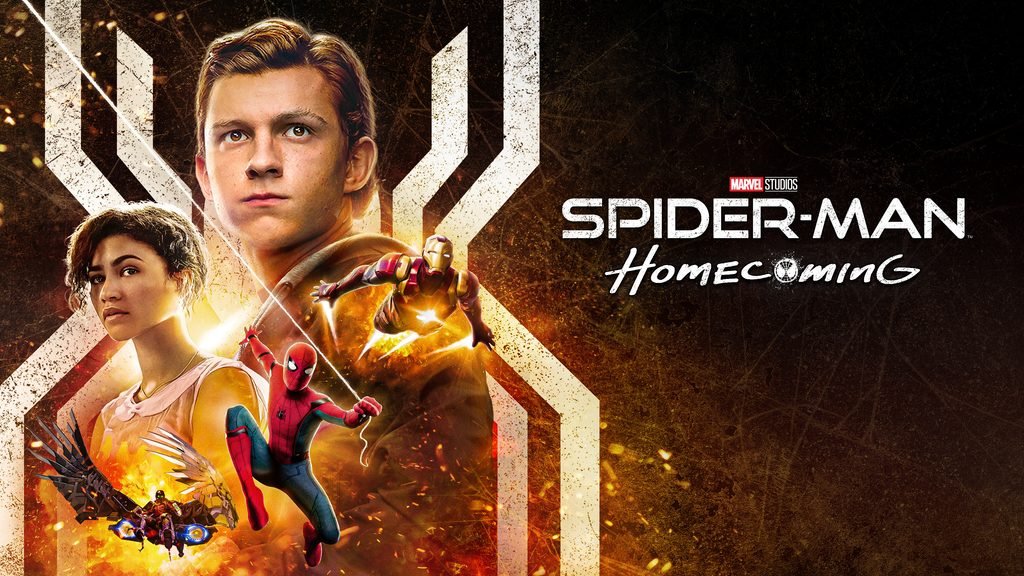
With Sony and Marvel Studios striking a deal to share the character, Tom Holland’s Peter Parker was introduced first in Captain America: Civil War before headlining his own film that folded Spider-Man into the Marvel Cinematic Universe. Homecoming deliberately skips the origin story altogether, since audiences had already seen it twice, and instead focuses on a younger, more excitable Peter trying to balance high school life with his eagerness to prove himself to Tony Stark and the Avengers.
The film’s villain, Adrian Toomes, played by Michael Keaton, is a salvage contractor turned black-market arms dealer known as the Vulture, whose motivations are given unusual sympathy: he’s a working-class man pushed toward crime after Stark-affiliated cleanup crews take away his livelihood. The film balances high school comedy with superhero action, and a late twist reveals that Toomes is actually the father of Peter’s crush, Liz. Homecoming was praised for making Peter feel like an actual teenager again, complete with awkwardness, a homemade suit, and a mentor relationship with Tony Stark that would come to define this era of the character.
Spider-Man: Far From Home (2019)
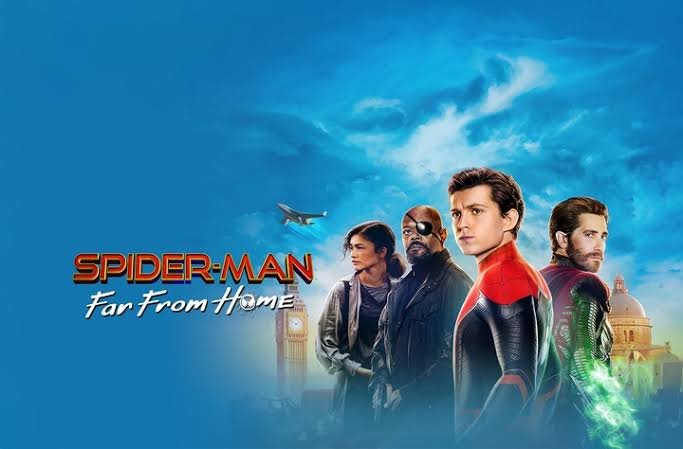
Set after the events of Avengers: Endgame, Far From Home finds Peter grieving the death of Tony Stark while trying to enjoy a school trip to Europe. Nick Fury and a new ally named Quentin Beck, aka Mysterio, pull him back into superhero duty to fight seemingly interdimensional creatures called the Elementals. Jake Gyllenhaal’s Mysterio initially appears to be a heroic figure from another Earth, but the film reveals he’s actually a disgruntled former Stark Industries employee using elaborate illusions and drone technology to stage fake threats and position himself as the next Iron Man.
The film explores Peter’s anxiety about being seen as Tony Stark’s successor, a burden he never asked for, while also developing his romance with MJ, reimagined here as Michelle Jones. The climax finds Peter defeating Mysterio’s illusion-based assault on London, but the real gut-punch comes in the post-credits scene: Mysterio, in his final act of vengeance, releases footage framing Peter for his own crimes and publicly reveals Spider-Man’s identity as Peter Parker to the entire world.
Spider-Man: No Way Home (2021)
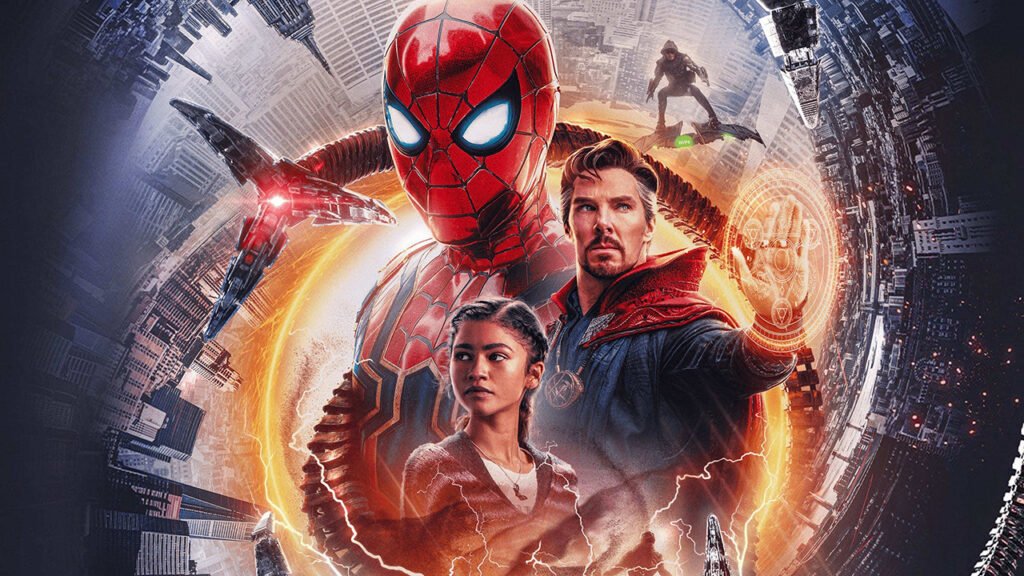
Building directly off that cliffhanger, No Way Home opens with Peter’s life turned upside down by his exposed identity. Desperate to restore normalcy, particularly to protect his loved ones and his friends’ college prospects, Peter asks Doctor Strange to cast a spell making the world forget he’s Spider-Man. When Peter’s own hesitations and second thoughts corrupt the spell, it instead cracks open the multiverse, pulling in villains from other Spider-Man realities who know Peter Parker is Spider-Man, without knowing it’s this Peter.
What follows is an extraordinary bit of franchise fan service that mostly earns its spectacle: Green Goblin, Doctor Octopus, Sandman, Lizard, and Electro all arrive from the Raimi and Webb-era films, played by the same actors. Rather than simply defeating them, Peter tries to cure them of the conditions that made them villains in the first place, a mission that becomes personal after tragedy strikes his own life. In the film’s most celebrated surprise, Tobey Maguire and Andrew Garfield return as their own versions of Peter Parker, giving each of the three cinematic Spider-Men a chance to share the screen and support one another through very different points in their own journeys. The film ends on a bittersweet note: to save the multiverse, Peter has everyone forget he ever existed as Peter Parker, sacrificing his relationships and his old life so the world can be safe. It’s arguably the most emotionally devastating ending of any Spider-Man film, leaving Holland’s Peter more isolated, and more purely heroic, than ever before.
Spider-Man: Into the Spider-Verse (2018)
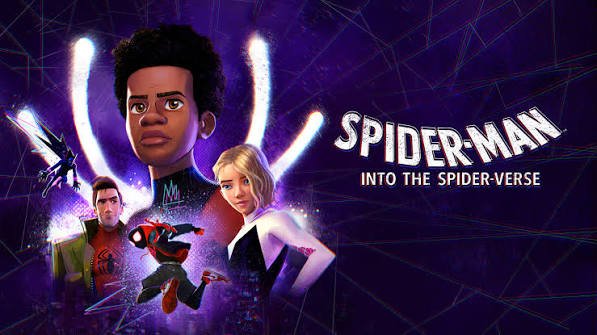
While live-action Spider-Man was busy crossing over with the MCU, an entirely different kind of Spider-Man story was being told in animation. Into the Spider-Verse introduces Miles Morales, a Brooklyn teenager who gets bitten by a radioactive spider shortly before witnessing the death of his universe’s Peter Parker at the hands of Kingpin, who is attempting to use a dangerous collider to reach alternate universes in hopes of reuniting with his own dead family.
The collider accidentally pulls several other Spider-People from parallel dimensions into Miles’s world, including an older, out-of-shape Peter B. Parker, the sharp and confident Gwen Stacy from her own universe (known as Spider-Woman), the black-and-white noir detective Spider-Man Noir, the anime-inflected Peni Parker, and the cartoonish Spider-Ham. Together, this makeshift team helps Miles learn to trust himself and grow into his own version of Spider-Man, distinct from any of them. The film’s visual style, blending comic-book panel techniques with fluid, painterly animation, was revolutionary, and it deservedly won the Academy Award for Best Animated Feature. It remains one of the most acclaimed superhero films ever made, live-action or otherwise.
Spider-Man: Across the Spider-Verse (2023)
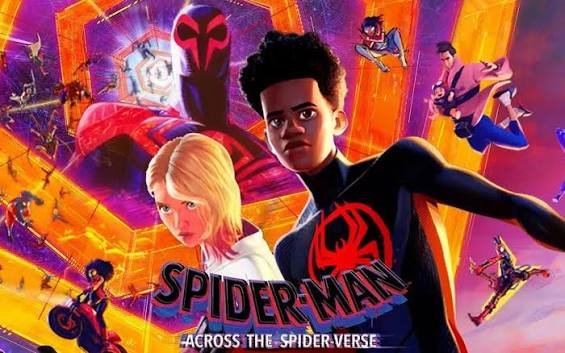
The sequel raises the stakes considerably. Miles, now more confident in his abilities but still struggling with keeping secrets from his parents, reconnects with Gwen Stacy, who has since joined a multiversal task force of Spider-People led by a variant named Miguel O’Hara, or Spider-Man 2099. This organization exists to preserve the stability of the multiverse by ensuring certain tragic events, deemed “canon” to every Spider-Person’s story, happen exactly as they’re supposed to.
The conflict escalates when Miles discovers that a villain called the Spot, who gained the ability to create portals after an accident involving Miles’s own universe, is growing more powerful with each version of himself he encounters. When Miles learns that his own personal tragedy is considered “canon” and unavoidable by Miguel’s group, he refuses to accept that fate, putting him at odds with virtually every other Spider-Person in the multiverse. The film ends on a cliffhanger, with Miles stranded in an alternate universe and confronted by a version of his own father from another reality, setting up a direct continuation. Visually even more ambitious than its predecessor, with each universe rendered in its own distinct art style, Across the Spider-Verse further cemented the animated films as a critical and commercial powerhouse, with a concluding chapter, Beyond the Spider-Verse, still in development.
A Character Built to Be Reinvented
Looking at the full run of films side by side, what’s striking isn’t just the sheer number of times Spider-Man has been rebooted, but how differently each version manages to hit the same emotional notes. Raimi’s trilogy is operatic and melodramatic, treating Peter’s guilt over Uncle Ben as a near-religious burden. The Amazing Spider-Man films lean into mystery and tragic romance. The MCU trilogy uses Peter’s youth and mentorship dynamics to explore what it means to grow into responsibility rather than have it thrust upon you fully formed. And the Spider-Verse films use the very concept of infinite alternate Spider-People to argue that anyone, from any background, can wear the mask and make the choice to be a hero.
That’s likely why the character keeps getting reinvented rather than retired: the premise is elastic enough to support wildly different tones and storytelling styles while the core idea, an ordinary person choosing to use extraordinary power responsibly, never stops working. Whether swinging through Raimi’s operatic New York, Webb’s mystery-laced version of the city, Holland’s MCU-adjacent world, or Miles Morales’s kaleidoscopic multiverse, Spider-Man has proven to be one of the most durable and adaptable heroes in cinema, capable of being made new again every few years without ever losing sight of what made him worth watching in the first place.