The Best Romantic Novels of All Time: A Complete Guide to Love in Literature
Few genres are as consistently underestimated and as consistently beloved as romance. Literary critics have spent decades treating romantic fiction as a lesser cousin to “serious” literature, yet romance remains one of the best-selling genres in publishing, and some of the most enduring, most reread novels in the Western canon are, at their core, love stories. From the drawing rooms of Regency England to the moors of Yorkshire to contemporary rom-com bestsellers, romantic novels have always done something no other genre does quite as well: they take the messy, universal experience of falling in love and turn it into narrative structure, tension, and payoff.
This guide walks through the novels most responsible for shaping the romance genre as we know it today, along with the literary classics that, while not marketed as “romance,” have defined how readers understand love on the page. Whether you’re new to the genre or looking to round out a well-read shelf, these are the books that matter.
What Makes a Romantic Novel Great
Before getting into specific titles, it helps to understand what separates a truly great romance from a forgettable one.
Tension that feels earned. The best romantic novels don’t manufacture obstacles between their leads arbitrarily — misunderstandings, class differences, family expectations, or personal wounds create conflict that feels organic to the characters, not just delaying tactics before a predictable ending.
Characters worth rooting for. Chemistry on the page depends on readers actually caring about both people in the relationship, not just the idea of the relationship. The strongest romantic leads have interior lives, flaws, and growth arcs independent of their love interest.
Emotional honesty. Great romance doesn’t shy away from vulnerability, insecurity, and the specific ways people sabotage their own happiness. The genre’s critics often mistake its optimism for shallowness, but the best romantic fiction earns its hope by being honest about heartbreak first.
A satisfying resolution. Whether it ends in marriage, reconciliation, or simply mutual understanding, romantic fiction traditionally promises readers an emotionally satisfying conclusion — the “happily ever after” or “happy for now” that distinguishes the genre from tragedy.
With that in mind, here is a tour through the most essential romantic novels ever written.
The Classic Foundations
Pride and Prejudice by Jane Austen (1813)
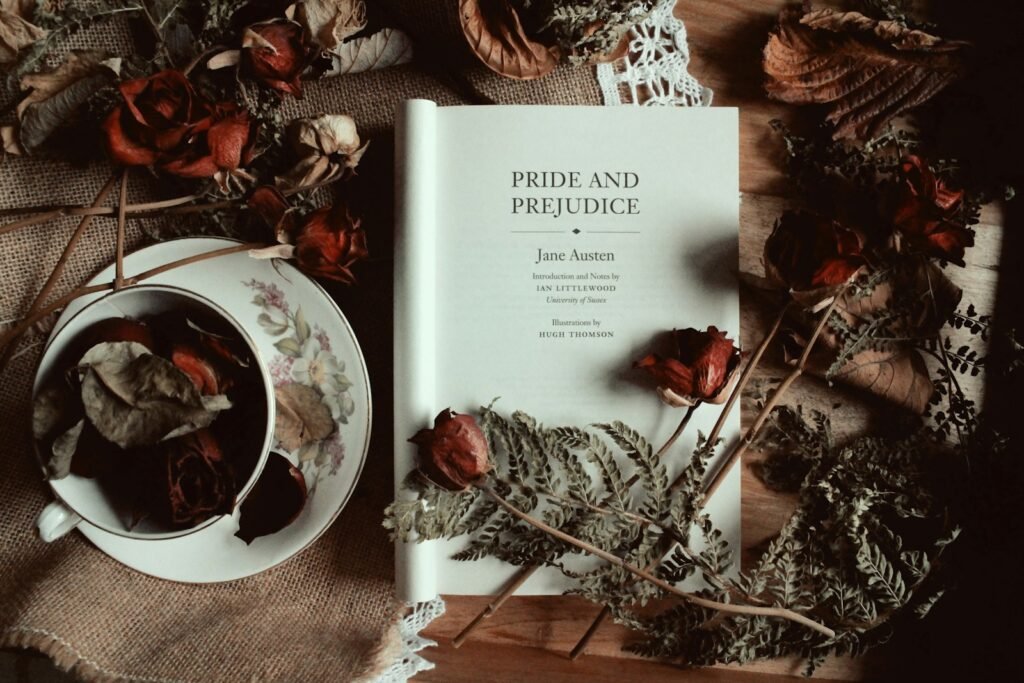
No conversation about romantic literature can begin anywhere else. Austen’s story of Elizabeth Bennet and the proud, initially insufferable Mr. Darcy set the template that romance novelists have been riffing on for two centuries: two intelligent people who mistake each other’s character, clash repeatedly, and slowly discover they were wrong. The enemies-to-lovers arc, the slow-burn tension, the grand romantic gesture — all of it traces back to this novel. Its wit and social observation elevate it well beyond genre fiction, but its emotional mechanics are pure romance.
Jane Eyre by Charlotte Brontë (1847)
Brontë’s gothic romance follows an orphaned governess who falls for her brooding, secretive employer, Mr. Rochester. What makes Jane Eyre so radical for its time — and still compelling now — is Jane’s insistence on being treated as Rochester’s equal despite the enormous gap in their social standing. The novel’s famous line about being “a free human being with an independent will” reframes the romance as a story about self-respect as much as passion.
Wuthering Heights by Emily Brontë (1847)
If Jane Eyre represents romantic love tempered by moral principle, Wuthering Heights represents romantic obsession taken to its most destructive extreme. The tortured, generation-spanning relationship between Heathcliff and Catherine Earnshaw is less a love story in the traditional sense than a study of how passion can curdle into cruelty and revenge. It remains one of the most intense, unsettling romances in English literature, and its influence runs through the darker, more gothic corners of the modern romance genre.
Anna Karenina by Leo Tolstoy (1877)
Tolstoy’s novel isn’t a conventional romance — it ends in tragedy, not union — but its depiction of Anna’s consuming, socially ruinous affair with Count Vronsky remains one of literature’s most searching examinations of desire, marriage, and the cost of following one’s heart against social convention. It’s frequently read as a cautionary counterpoint to the more optimistic romances on this list, proving the genre’s emotional stakes can carry a novel of enormous scope.
Twentieth-Century Romantic Classics
Rebecca by Daphne du Maurier (1938)
Du Maurier’s gothic romance follows a young, unnamed narrator who marries the wealthy widower Maxim de Winter, only to find herself haunted — figuratively and perhaps literally — by the memory of his glamorous late wife, Rebecca. It’s a masterclass in atmosphere and suspense, using romantic uncertainty as the engine of psychological tension. Few novels capture the specific anxiety of feeling inadequate compared to someone else’s memory quite as well.
Gone with the Wind by Margaret Mitchell (1936)
Set against the American Civil War and Reconstruction, Mitchell’s sprawling novel follows the fiery, self-interested Scarlett O’Hara and her complicated, on-again-off-again relationship with the roguish Rhett Butler. Its central romance is defined by two people who are almost perfectly matched in stubbornness and self-preservation, which makes their eventual reckoning with each other one of the most quoted romantic conclusions in American fiction.
The Notebook by Nicholas Sparks (1996)
Sparks’ novel about Noah and Allie’s decades-spanning love story, framed by an elderly man reading their history aloud to his wife suffering from dementia, helped define the modern romantic tearjerker. Its combination of youthful passion and devoted, lifelong commitment became a template for an entire subgenre of contemporary romance fiction focused on enduring, against-the-odds love.
The Rise of Modern Romance Fiction
Outlander by Diana Gabaldon (1991)
Gabaldon’s genre-blending novel follows Claire Randall, a World War II nurse who is mysteriously transported back to eighteenth-century Scotland, where she falls in love with the Highland warrior Jamie Fraser. By fusing romance with time travel, historical fiction, and adventure, Outlander helped prove that romantic fiction could support enormous scale and genre-crossing ambition while still centering its love story.
The Hating Game by Sally Thorne (2016)
A defining entry in the modern workplace enemies-to-lovers subgenre, Thorne’s novel follows two rival executive assistants locked in constant one-upmanship until their antagonism reveals itself as something else entirely. Its sharp banter and slow-burn tension made it one of the most influential contemporary romance novels of the 2010s, helping fuel the genre’s resurgence in mainstream popularity.
Red, White & Royal Blue by Casey McQuiston (2019)
McQuiston’s romance between the son of the U.S. president and a British prince reimagined the genre for a new generation, combining political satire, queer romance, and classic rom-com structure. Its massive popularity — and subsequent film adaptation — signaled a broader shift in mainstream romance toward more diverse leads and settings.
It Ends with Us by Colleen Hoover (2016)
Hoover’s novel, which became one of the best-selling books of the decade largely through social media word of mouth, follows Lily Bloom as she navigates a relationship that mirrors patterns from her childhood. While its subject matter is heavier than much of the genre, its massive commercial success reshaped how publishers think about romance’s audience and marketing in the era of viral recommendation.
Beloved Subgenres Worth Exploring
Romance is less a single genre than an umbrella covering dozens of distinct traditions, each with its own devoted readership.
Regency and historical romance owes its entire modern existence to Georgette Heyer, whose novels in the mid-twentieth century essentially invented the conventions — witty banter, meticulous period detail, marriage-of-convenience plots — that writers like Julia Quinn (author of the Bridgerton series) continue to build on today.
Paranormal romance blends supernatural elements with romantic plotting, a tradition that runs from Anne Rice’s brooding vampire fiction through Stephenie Meyer’s Twilight series, which introduced an entire generation of readers to the genre’s tropes.
Contemporary romance covers everything from small-town love stories to workplace rivalries to friends-to-lovers arcs, with authors like Emily Henry (Beach Read, People We Meet on Vacation) currently defining the genre’s literary, character-driven edge.
Romantic suspense merges love stories with thriller pacing, a tradition popularized by authors like Nora Roberts, whose decades-long career and staggering output have made her arguably the most commercially successful romance novelist in publishing history.
Why Romance Deserves Serious Critical Attention

The persistent condescension toward romantic fiction says more about literary gatekeeping than it does about the genre’s actual craft. Writing a romance that genuinely earns its emotional payoff requires precise plotting, a deep understanding of character psychology, and — despite the genre’s reputation for formula — real narrative risk, since readers who know the ending will still arrive have to be kept invested through the journey there. Austen, the Brontës, and Tolstoy are rightly considered literary giants, and their most famous novels are, structurally, romances. The line separating “literary fiction that happens to be a love story” from “genre romance” is often less about craft and more about marketing categories and, frequently, the perceived gender of the audience.
The genre’s commercial success also reflects something real about readers’ needs. Romance offers a reliable emotional experience — tension resolved into satisfaction — in a way many other genres deliberately withhold. That’s not a weakness; it’s a specific, difficult craft skill, one that authors from Austen to Emily Henry have spent their careers refining.
Notable Romantic Novels Beyond the Essentials
A handful of additional titles deserve mention for readers who want to go deeper into the genre’s range.
Edith Wharton’s The Age of Innocence examines a love triangle among New York’s high society in the 1870s, where the central romance is defined less by whether the leads love each other and more by whether social convention will ever allow them to act on it. Wharton’s precise, often devastating prose won her the Pulitzer Prize and remains one of the most emotionally restrained romantic tragedies in American literature.
Nicholas Sparks’ broader catalog, including A Walk to Remember and Dear John, extended the formula he established with The Notebook into a reliable commercial engine, proving that earnest, sentimental romance built around loss and devotion could consistently top bestseller lists across multiple decades.
Julia Quinn’s Bridgerton series modernized Regency romance for a contemporary audience, blending Heyer’s wit with frank sexuality and a large ensemble cast, and its adaptation into a global streaming phenomenon introduced the genre’s conventions to millions of viewers who had never picked up a romance novel.
Beverly Jenkins, often credited as one of the pioneering voices in African American historical romance, has spent decades writing love stories set against underrepresented periods of Black history, expanding the genre’s historical scope well beyond its traditionally Eurocentric settings.
Sarah J. Maas’s fantasy-romance hybrids, including the A Court of Thorns and Roses series, illustrate the genre’s increasing overlap with fantasy world-building, a trend that has driven much of the romance category’s explosive recent growth, particularly among younger readers discovering the genre through “romantasy.”
The Emotional Mechanics Behind a Great Love Story

Part of what makes romantic fiction endure is that it operates on a set of emotional mechanics readers instinctively respond to, even when they can’t articulate why a particular book worked.
The slow burn. Delaying romantic or physical intimacy while building tension through small, charged interactions is one of the genre’s most reliable tools. When executed well, as in Pride and Prejudice or The Hating Game, the eventual resolution feels earned rather than rushed, because readers have spent hundreds of pages anticipating it alongside the characters.
The internal versus external conflict. The strongest romantic novels layer external obstacles — class, family disapproval, distance, misunderstanding — over internal ones, such as a character’s fear of vulnerability or past heartbreak. Jane Eyre pairs Rochester’s literal secret with Jane’s psychological need for self-respect; that doubling is part of why the novel still resonates.
The grand gesture. Nearly every classic romantic novel builds toward a moment where a character demonstrates, through action rather than words, that they’ve changed or that their feelings are genuine. Darcy’s letter, and later his willingness to quietly help Elizabeth’s family, function this way in Pride and Prejudice — proof that romantic payoff often depends on behavior, not declarations.
Contrast between the leads. Whether it’s temperament, class, or worldview, meaningful difference between romantic leads creates the friction that makes their eventual connection feel like a genuine transformation for both characters, rather than a foregone conclusion.
Understanding these mechanics doesn’t diminish the emotional experience of reading romance — if anything, it explains why certain novels succeed so completely at what they set out to do, while others feel formulaic or hollow despite following the same basic structure.
How to Start Reading Romantic Fiction
For readers newer to the genre, or those looking to explore it more seriously, a few practical entry points can help.
Start with the tone you actually want. Romance spans everything from lighthearted rom-com to devastating tragedy, so identify whether you’re looking for comfort reading, emotional intensity, or something in between before picking a book at random.
Use tropes as a map, not a limitation. Enemies-to-lovers, friends-to-lovers, second-chance romance, and fake dating are recurring structures across the genre, and knowing which tropes appeal to you can help narrow down recommendations quickly.
Don’t skip the classics. Pride and Prejudice and Jane Eyre remain some of the most accessible, rewarding entry points into romantic literature, and their influence on the modern genre makes them useful context for everything that followed.
Follow authors, not just titles. Romance readers often develop strong author loyalty because voice and pacing style matter enormously in a genre built on emotional delivery. Sampling a few chapters from authors like Emily Henry, Nora Roberts, or Julia Quinn can help identify whose style resonates before committing to a full backlist.
Give contemporary romance a chance. Readers who associate the genre entirely with historical bodice-rippers may be surprised by how much contemporary romance has evolved toward literary prose, diverse representation, and genuinely difficult emotional territory.
Final Thoughts
Romantic novels occupy a strange position in literary culture: dismissed by critics, devoured by readers, and quietly responsible for some of the most enduring and technically accomplished storytelling in the English language. Whether it’s Austen’s precision with social comedy, the Brontës’ gothic intensity, or the contemporary genre’s growing embrace of diverse voices and forms, romantic fiction succeeds because it takes something universal — the terror and joy of loving another person — and gives it shape, stakes, and resolution. That’s not a lesser literary achievement. It might be one of the hardest to pull off well, which is exactly why the novels that do it best have lasted as long as they have.
For readers who have dismissed the genre as formulaic escapism, revisiting even one or two of the novels above often changes the equation entirely. The best romantic fiction isn’t interested in pretending love is simple — it’s interested in showing exactly how complicated it is, and then finding a way through anyway. That combination of honesty and hope, rendered with real craft, is what has kept readers returning to these books for centuries, and what will almost certainly keep new romantic classics being written for centuries more.